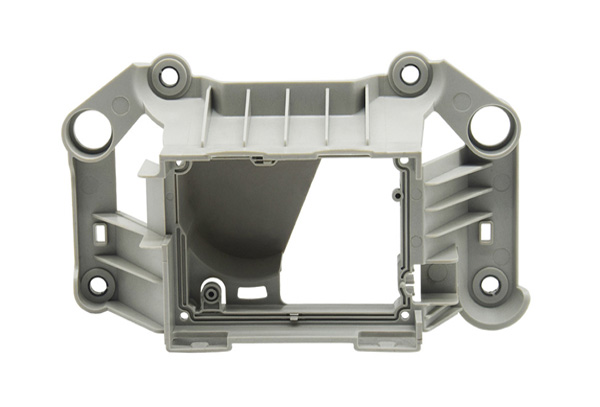
Parts that 3-axis machines struggle with almost always come down to two critical issues: tool interference and undercut/access limitations.That’s exactly why 5-axis machining exists: using two additional rotary axes (A/B/C) to directly solve these physical challenges.
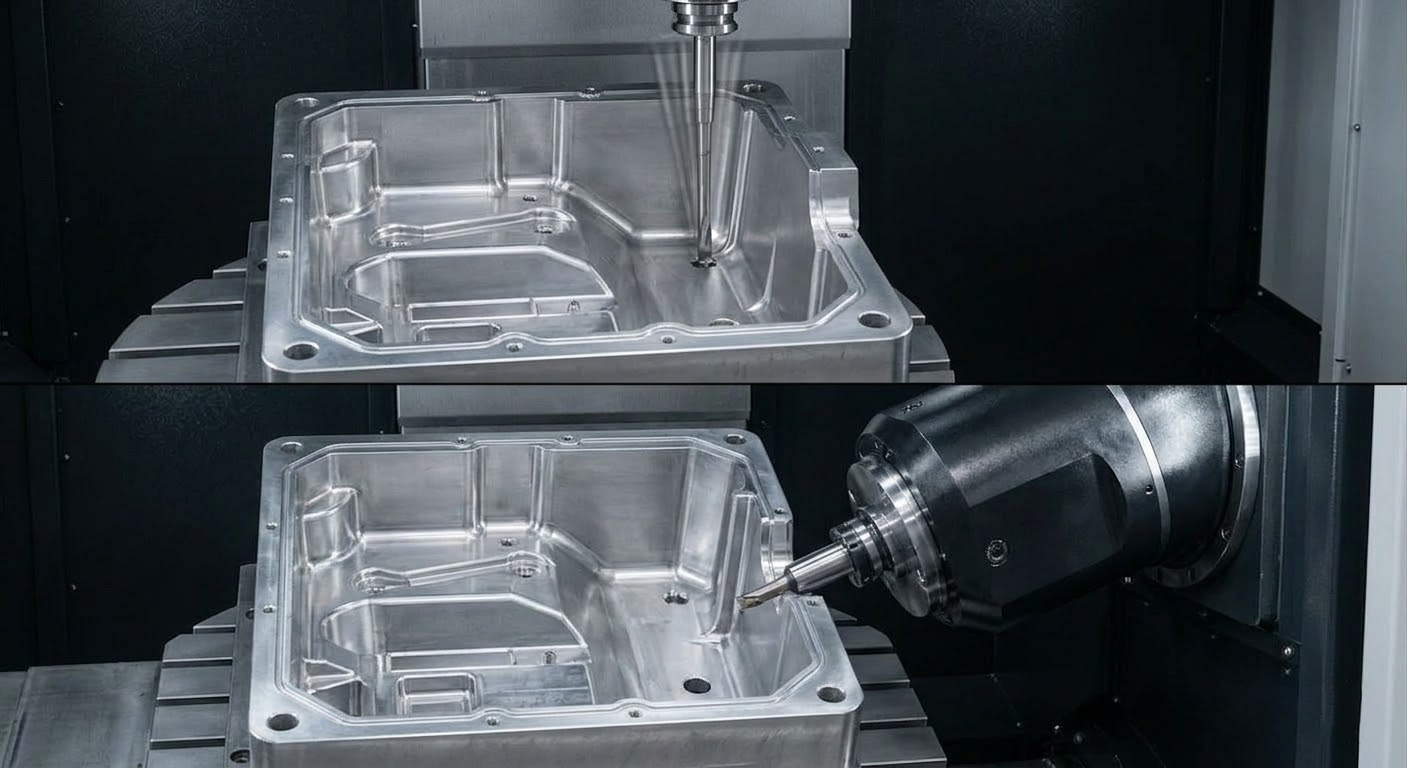
Configuration by Part Type
· Double Rotary Table: Ideal for small-to-medium housings, molds, and components. The workpiece rotates while the spindle cuts vertically, with simple programming and stable performance.
· Double Swivel Head: For large, heavy parts. The spindle head tilts and rotates to avoid interference, delivering strong rigidity for deep cavities and undercuts.
· 1 Swivel + 1 Rotary: A balanced solution for impellers, blades, and rotational parts, combining rigidity and flexibility.
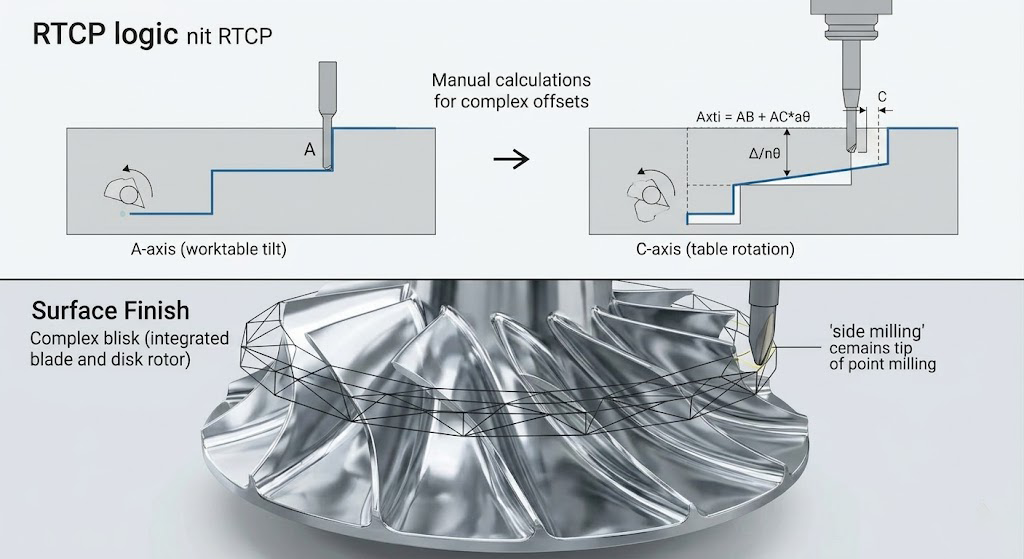
Core Technology: RTCP (Rotational Tool Center Point Control)
· Without RTCP: Manual offset calculations are required, with high risk of collision.
· With RTCP: The CNC system automatically compensates for tool length and pivot distance, ensuring the cutting tip follows the programmed path accurately.
· One-Setup Efficiency: Complete 5-sided machining in a single clamping, eliminating repeated positioning and reducing deformation for thin-walled parts.
· Improved Rigidity: By tilting the tool to cut vertically into deep cavities, shorter, stiffer tools replace long, fragile tools — reducing vibration and improving stability.
· Premium Surface Finish: Side cutting instead of point milling maintains consistent cutting speed, producing smooth, low-tool-mark surfaces.
5-axis machining is not for show — it’s about getting complex jobs done right in one setup.
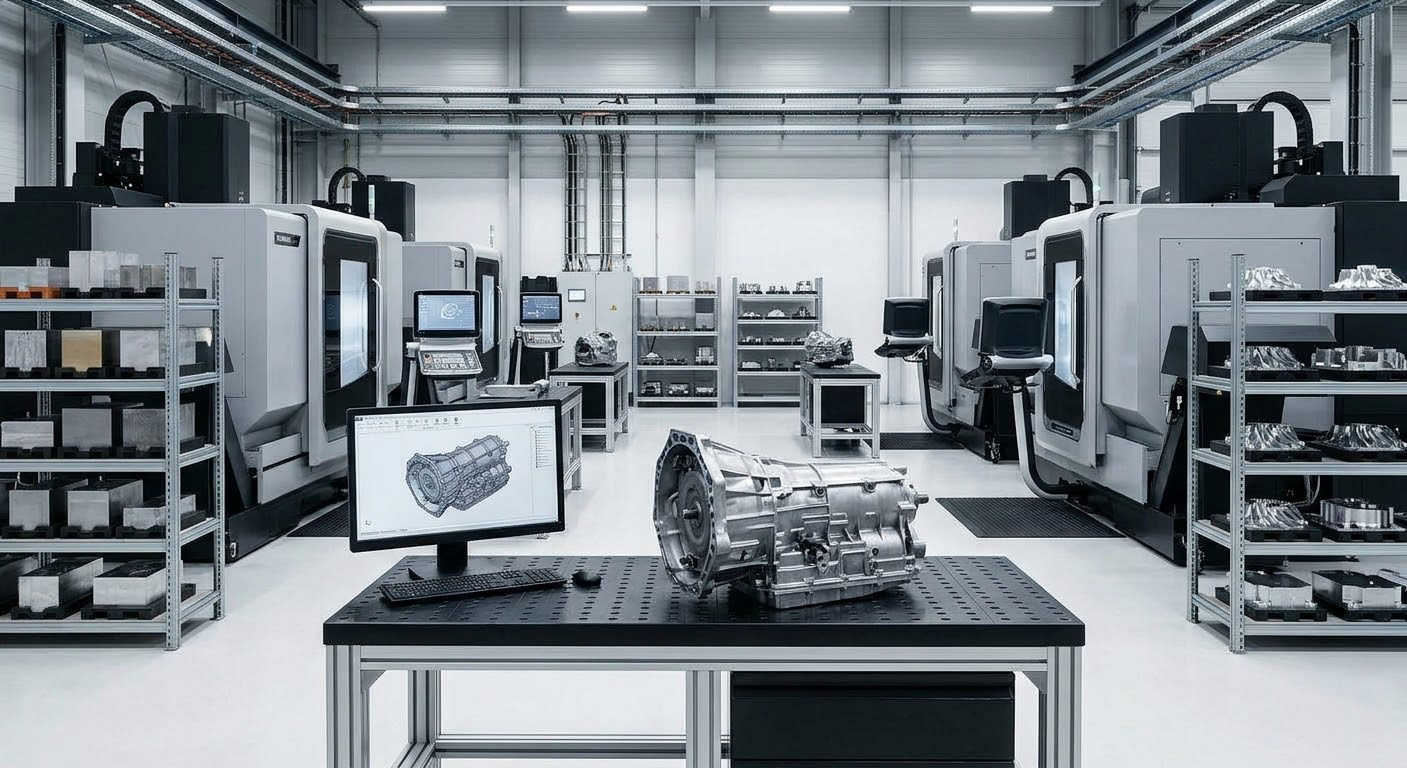
As a professional manufacturer specializing in precision prototypes and custom CNC machining, we run full 5-axis machining centers with RTCP and advanced simulation to prevent collisions.With years of experience processing aluminum, engineering plastics, composites, and other materials, we consistently deliver complex geometries — including deep cavities, undercuts, curved surfaces, and thin-wall structures — with tight tolerances, stable quality, and ready-to-assemble finishes.
We turn parts that 3-axis can’t make, can’t make well, or can’t make efficiently into on-time, high-quality finished components.