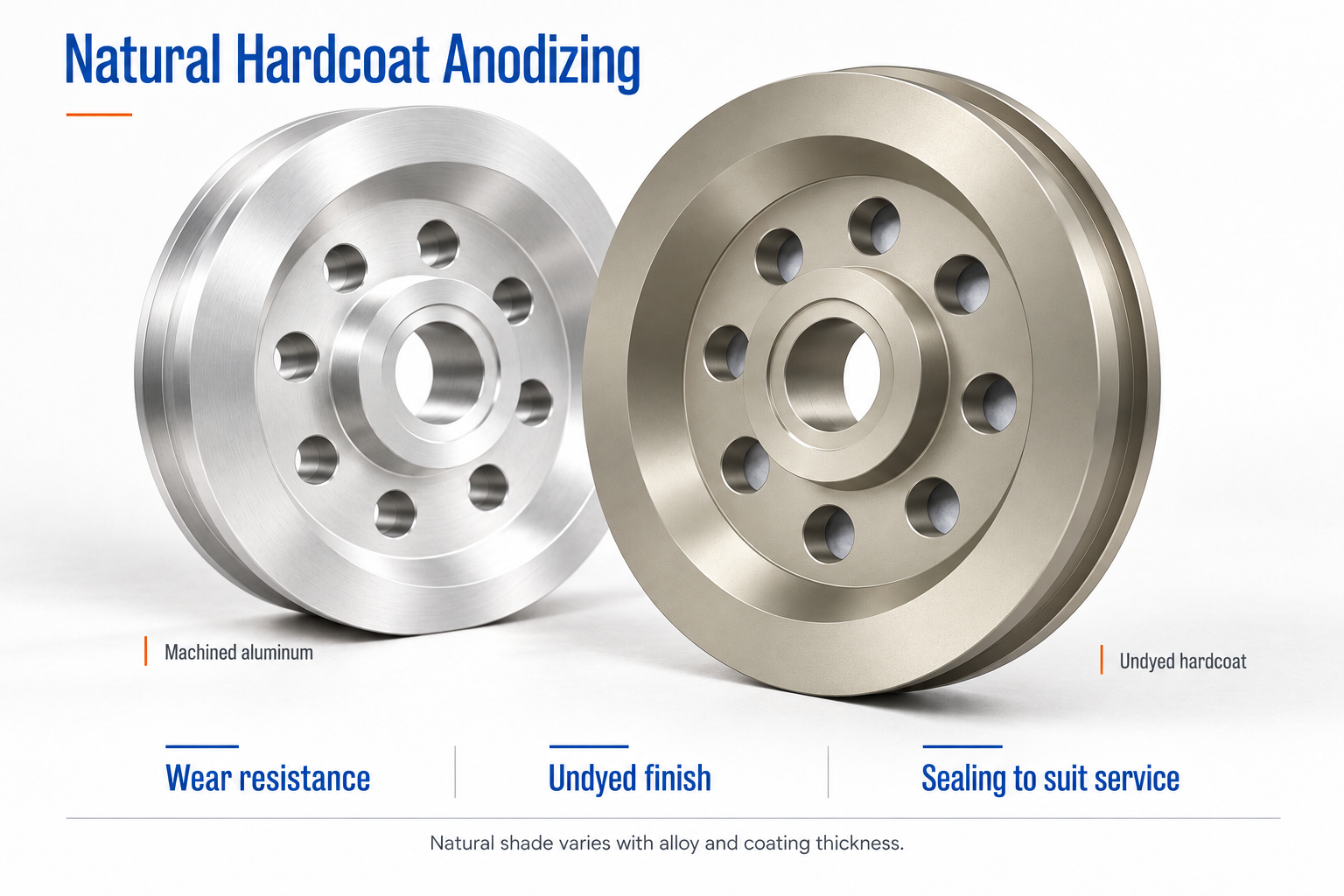
Custom aluminum discs for industrial equipment need accurate dimensions for assembly and durable surfaces for service. Combining precision CNC turning and milling with hardcoat anodizing brings these requirements into one manufacturing plan. This component, with its circular hole pattern and undyed hardcoat finish, illustrates the process from machining to surface treatment.
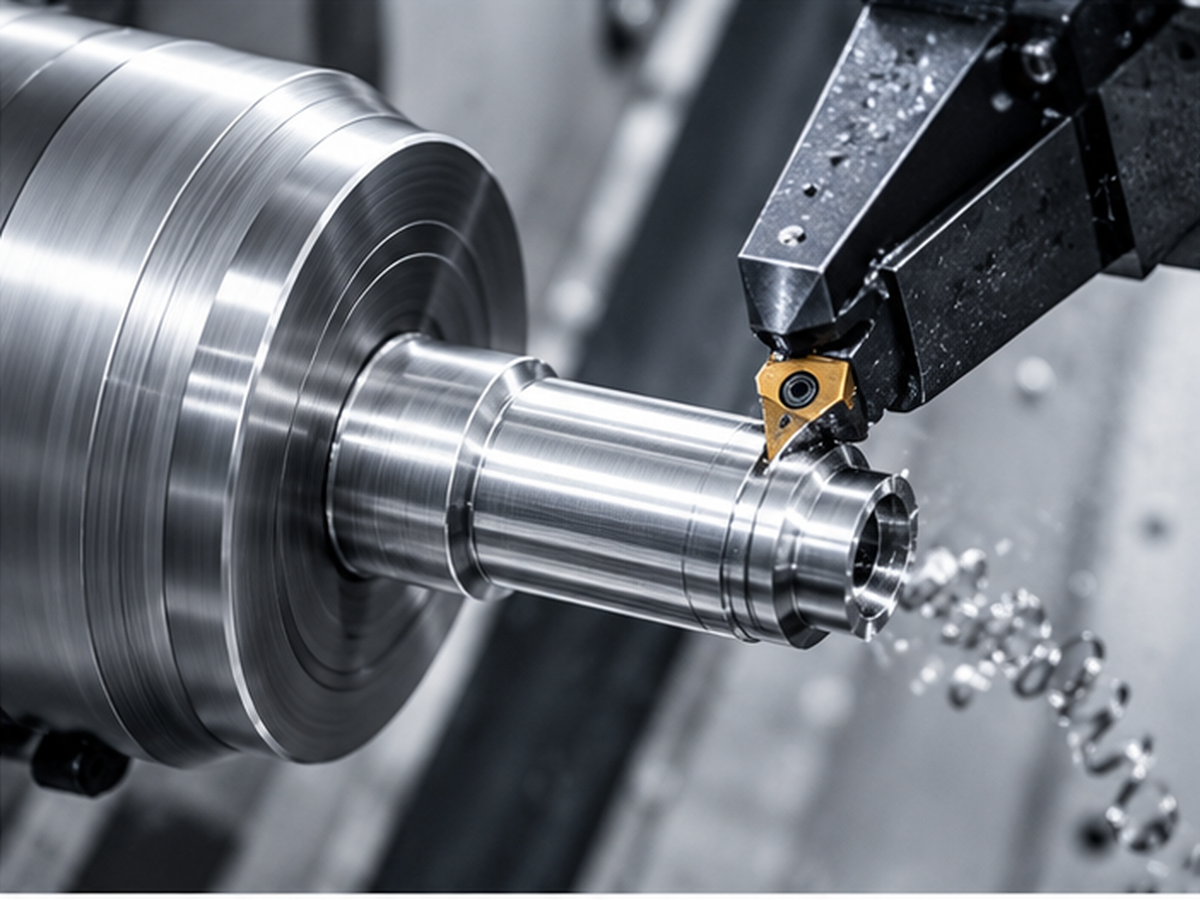
For a component like this, concentricity and hole position deserve attention from the start. Turning establishes the rotational geometry, while milling produces the hole pattern. Workholding and machining datums must be planned so that these features remain correctly aligned across operations. This matters during equipment assembly, where a disc can look correct yet still create fitting or alignment problems.
Hardcoat anodizing is often selected when aluminum parts need greater resistance to wear and abrasion. Compared with conventional decorative anodizing, it generally produces a harder, thicker oxide layer. Corrosion protection also depends on the coating specification and whether it is sealed. Sealing should therefore be selected according to the balance of wear resistance and corrosion resistance required in service.
Natural hardcoat anodizing means the coating is left undyed; it does not mean the original aluminum color remains unchanged. The alloy and coating thickness can produce gray, bronze or darker tones. For buyers seeking an understated industrial appearance, this can be a suitable option. However, the expected shade and acceptable color variation should be agreed before production, especially when several visible parts must match.
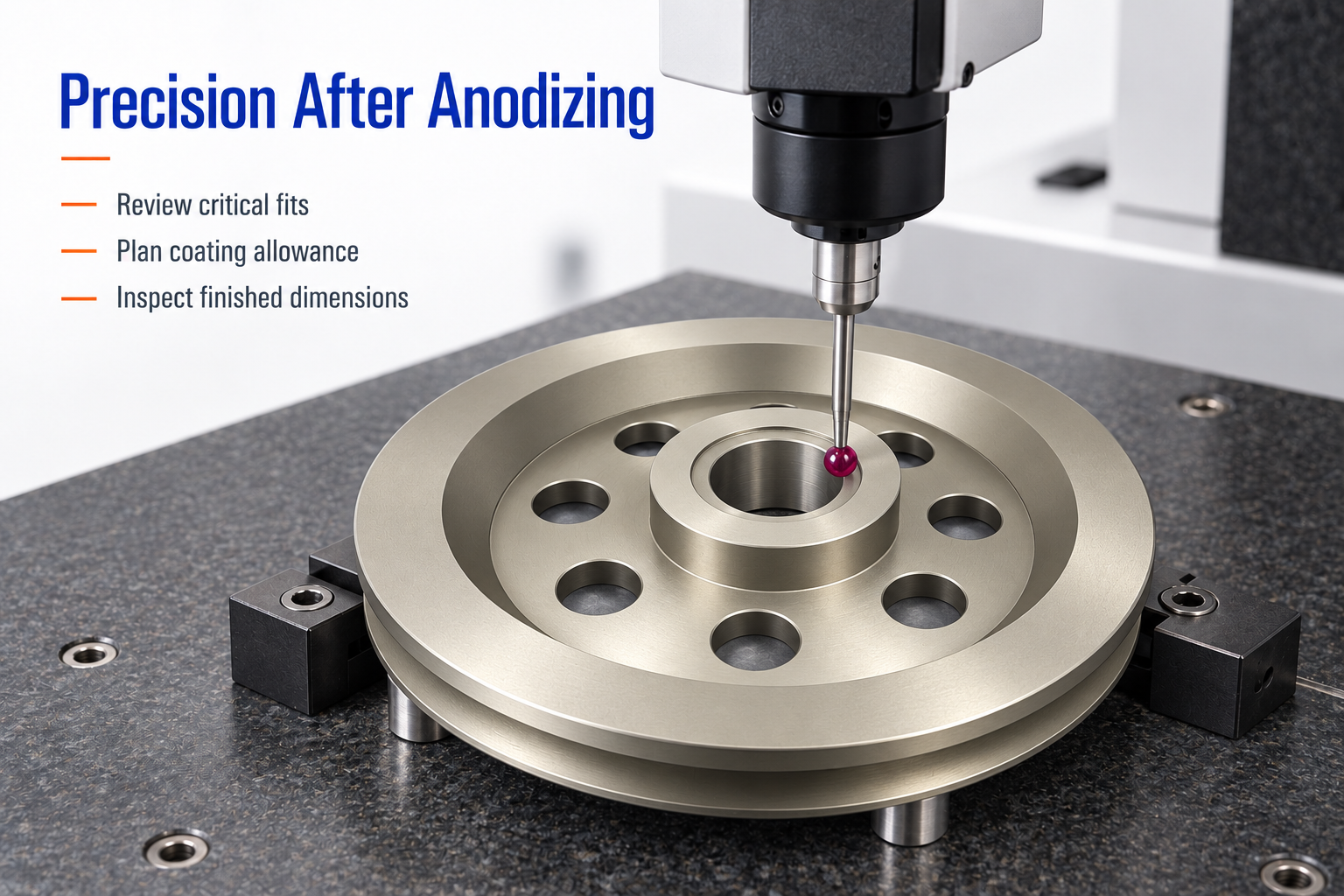
Finishing also affects dimensional accuracy. Anodizing converts part of the aluminum surface into oxide and creates outward growth, which can increase outside diameters and reduce hole diameters. Critical fits need to be reviewed before machining, with coating allowances or selective masking considered where necessary. For a larger disc, coating thickness and appearance consistency should also form part of the acceptance requirements. Final inspection needs to address the dimensions specified for the finished condition.
Yongen supports custom aluminum CNC machining for prototypes, functional testing and low-volume production. Our project review covers the drawing, material, machining requirements, surface treatment and inspection needs. For disc-shaped components, this means considering concentricity, hole location and finished fits together.
Send Yongen your 3D models and 2D drawings, along with the material, quantity and critical tolerances. If hardcoat anodizing is needed, please include your requirements so we can evaluate the complete machining and finishing plan.